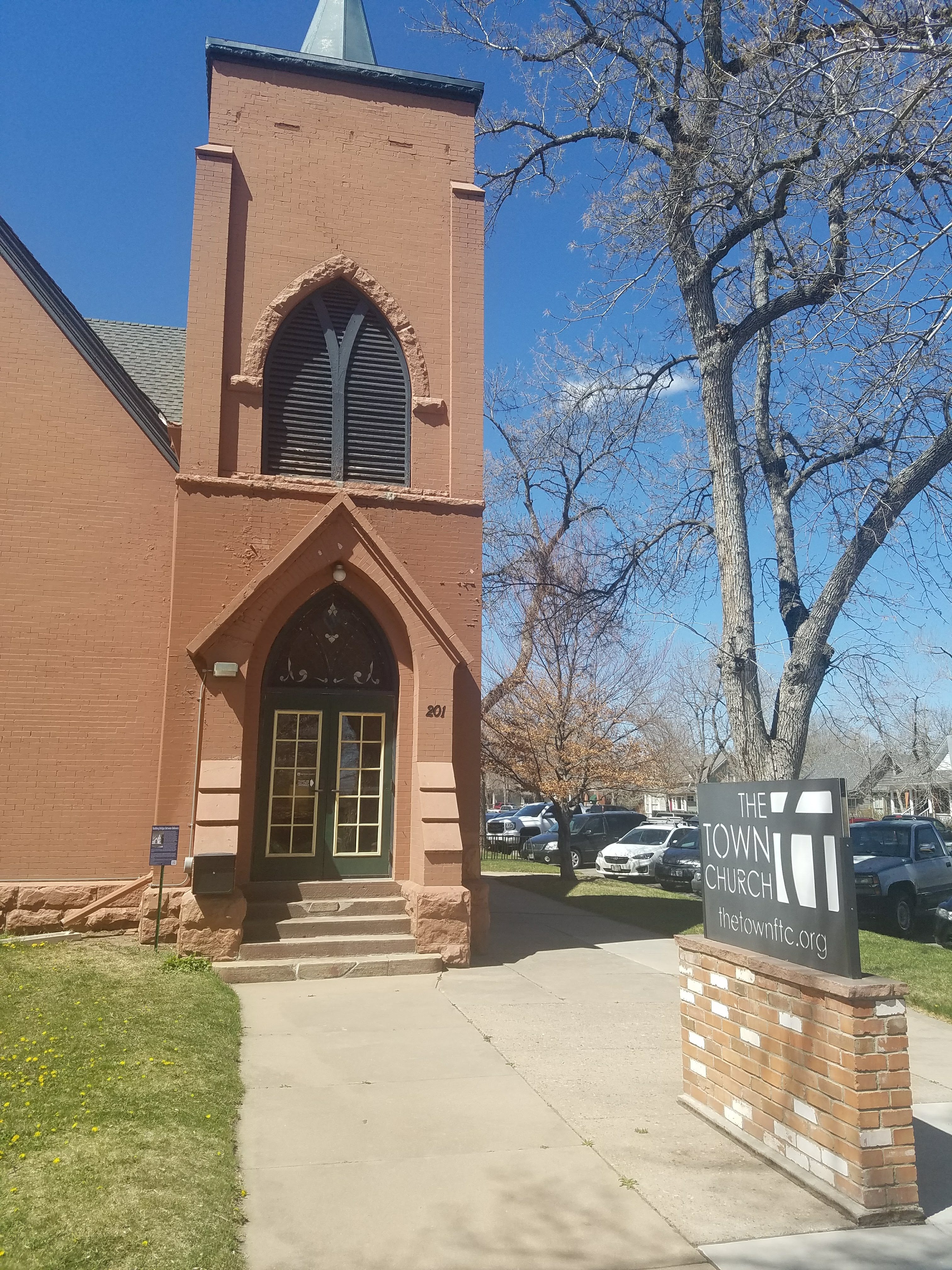
This is an off-site panel I wrote and installed at The Town Church on Oak and Whedbee. It used to be the home to German Evangelical Congregational Church.
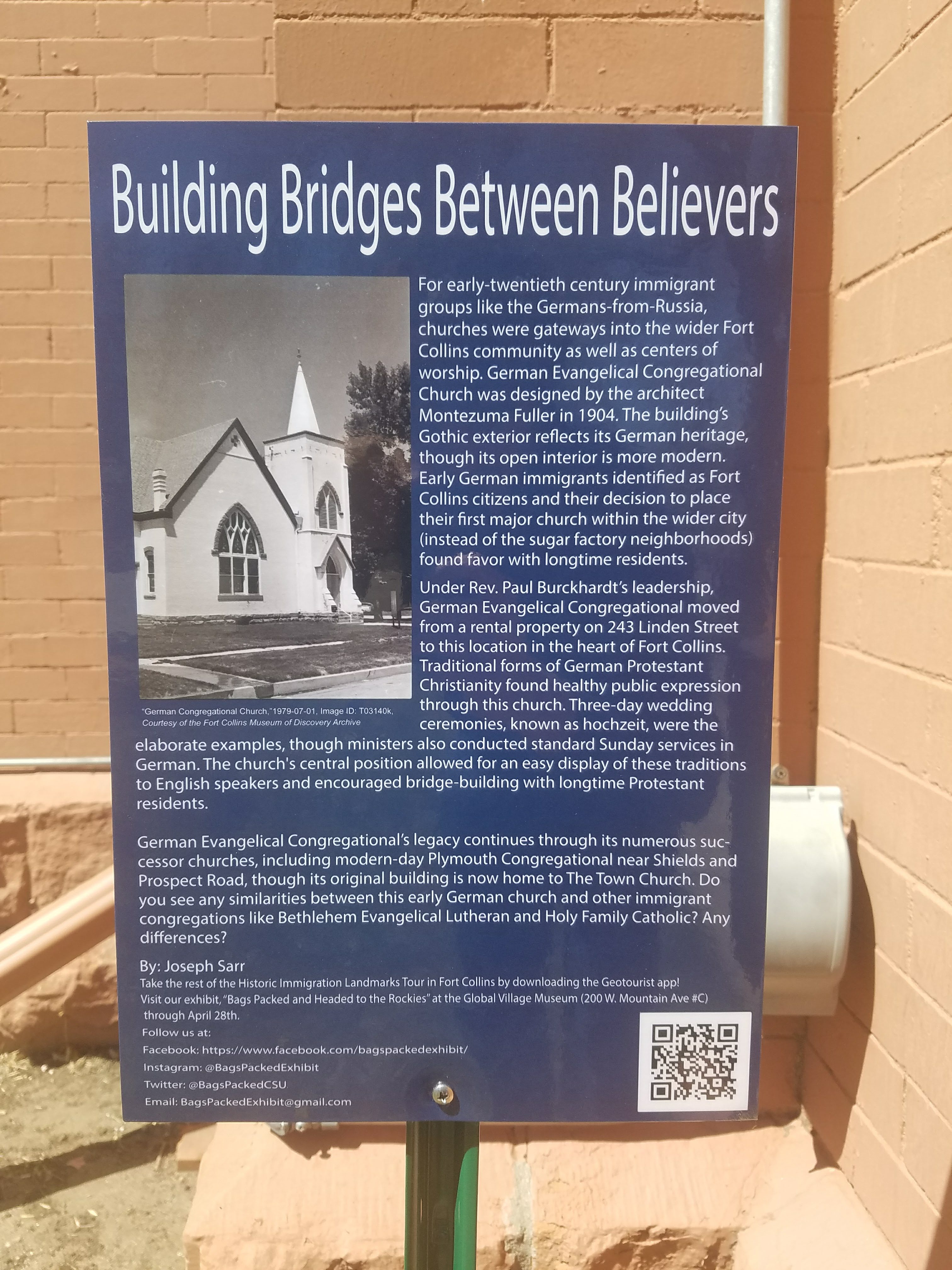
“Building Bridges Between Believers”
For early-twentieth century immigrant groups like the Germans-from-Russia, churches were gateways into the wider Fort Collins community as well as centers of worship. German Evangelical Congregational Church was designed by the architect Montezuma Fuller in 1904. The building’s Gothic exterior reflects its German heritage, though its open interior is more modern. Early German immigrants identified as Fort Collins citizens and their decision to place their first major church within the wider city (instead of the sugar factory neighborhoods) found favor with longtime residents.
Under Rev. Paul Burckhardt’s leadership, German Evangelical Congregational moved from a rental property on 243 Linden Street to this location in the heart of Fort Collins. Traditional forms of German Protestant Christianity found healthy public expression through this church. Three-day wedding ceremonies, known as hochzeit, were the most elaborate examples, though ministers also conducted standard Sunday services in German. The church’s central position allowed for an easy display of these traditions to English speakers and encouraged bridge-building with longtime Protestant residents.
German Evangelical Congregational’s legacy continues through its numerous successor churches, including modern-day Plymouth Congregational near Shields and Prospect Road, though its original building is now home to The Town Church. Do you see any similarities between this early German church and other immigrant congregations like Bethlehem Evangelical Lutheran and Holy Family Catholic? Any differences?
