A Visit to Yad Vashem

It’s been a while since I last wrote on this blog, so here’s a little something that I wrote after my trip to Israel this summer. I visited the Holocaust museum at Yad Vashem and offered to write a museum analysis for the trip organizers based off my observations. The museum itself is a masterpiece of design, from the architecture of the building to the smallest display cabinets. An appropriately somber atmosphere permeates every corner of the place. Aside from its emotional power, however, Yad Vashem also operates perfectly well as an educational center about the Holocaust, with a plethora of objects and informative panels on display and a massive testimonial repository. What follows is my rough assessment of Yad Vashem’s narrative design, exhibition layout, and educational potential. It is important to note that the following recollections were collected from my first (and so far only) visit to the museum. Photography is not allowed inside, so I took extensive notes of my observations in a notebook. Despite the thoroughness of my recordings, I obviously missed a lot of details. Yad Vashem is massive, and even ten visits wouldn’t offer enough time to take in everything. I only had a couple hours to experience the museum, but I’m sure a slower and more methodical visit would yield a more detailed analysis. The museum itself is also the only aspect of Yad Vashem that I write about here. Other parts of the campus (like the incredible children’s memorial) are not included.
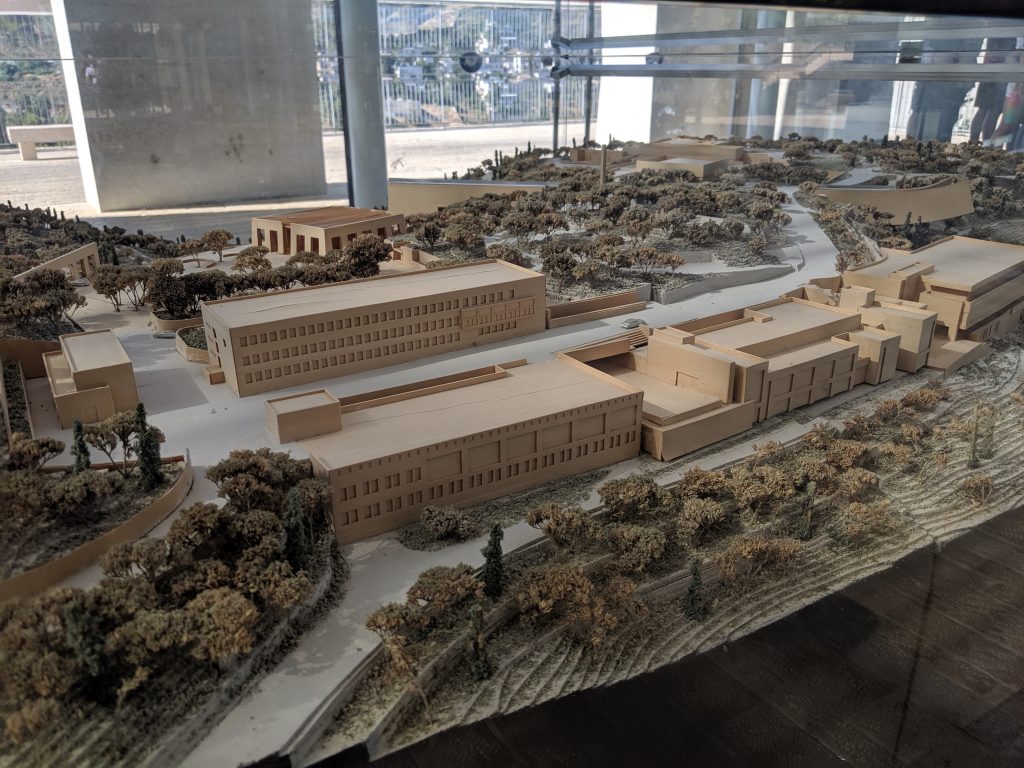
A model of the Yad Vashem campus

Storytelling and Narrative

Yad Vashem operates under four mandates: to educate the public, amass archival documents, honor the righteous among nations, and commemorate the victims of the Holocaust. The fourth mandate heavily shapes the narrative focus of its museum. The Yad Vashem museum recounts a wide-scale history of the Holocaust but does so by telling the victims’ stories in a way that both informs visitors and honors the dead. Far too often the scale of death during the Final Solution can overwhelm modern audiences with the sheer numbers of those killed and cause us to view those events with a slight sense of personal detachment. While Yad Vashem occasionally confronts visitors with these statistics in a few of its exhibits, the museum’s primary narrative focus routinely highlights the individual lives lost during Hitler’s reign.

The museum maintains a bottom-up perspective on the history of the Holocaust. While large-scale events like the Nazification of Germany, the implementation of the Final Solution, and the launching of World War II frame the overarching narrative, visitors learn about these episodes through the lens of the people who experienced them firsthand, primarily Europe’s Jews. The typical museum tour begins with small exhibits on daily life in the years before the Holocaust, then goes on to explore the topics of European anti-Semitism, ghetto life, forced deportations, concentration camps, and mass murder from a predominately Jewish perspective. Nearly every exhibition room contains multiple biographical panels which spotlight individual Jews whose life stories intertwined with the respective subject matter on display. When entering a new exhibition space, guides often introduce the next subject by skillfully telling a personal anecdote regarding a featured historical figure, such using the story of Judenrat chairman Adam Czerniakow to segue into an exhibit on the Treblinka death camp.

Curators prioritize the individual histories behind the artifacts on display, using material culture as an effective medium for telling the stories of people who left few (if any) other surviving records or documentation. For example, the exhibit on the division of Poland tells its narrative from a ground-level vantage point, using diaries, family photographs, and everyday objects to emphasize the terror felt by Jewish Poles during the event. While the original owners of most of these personal artifacts did not survive the war, part of them lives on in through the curators’ detailed item descriptions. For instance, a ruined guitar tells the heartbreaking story of the Polish Matsa family, who crafted such instruments for their living. This storytelling decision not only keeps one’s focus on the individuals who suffered under Nazi atrocities, but also builds a powerful emotional backbone to each exhibit.

While this individualistic lens forms the core of Yad Vashem’s narrative focus, other important themes recur throughout each exhibit and aid visitors in understanding how an event as catastrophic as the Holocaust emerged. Topics on the willingness of the Nazi regime to lie to its people and its efficiency at deception also pervade many exhibits, notably those on Nazi propaganda. Issues of how international indifference and disbelief contributed to the Holocaust’s destructive legacy resonate throughout the museum and are topics of increasing relevance in today’s growing climate of Holocaust denial. As if to leave no ambiguity regarding the extent of blame for Nazi atrocities, my guide subtly (but consistently) used the term “murder” instead of more motivationally-vague verbs like “kill” or “die” to describe Jewish deaths.

The Yad Vashem museum is largely oriented towards an adult audience and its narrative choices reflect that assumption of maturity. The sheer brutality of the Holocaust is presented with few filters (the end film on the closure of the concentration camps and subsequent mass burials is particularly visceral and disturbing), and the injustice wrought upon its victims underscores each exhibit. By emphasizing personal connections and shared humanity between modern visitors and the victims of the Holocaust, however, the museum invests its patrons in the history of this great tragedy. As a result, a standard visit can be a very powerful experience, producing deep anguish, sympathy, and anger among visitors. The Yad Vashem museum tells the sad history of the Holocaust in a very effective and personally-engaging manner, and its final exhibit, the beautifully-designed Hall of Names, reminds guests of the importance of memory and why we must never forget what happened decades ago. The narrative concludes with a picturesque view of Jerusalem, a bittersweet note of hope that contrasts with the bleakness of everything that precedes it.

Exhibition Design

The masterful exhibit design of Yad Vashem enables curators to tell their narratives in a variety of imaginative and immersive ways. The building itself, designed by renowned architect Moshe Safdie in 2005, uses its very architecture to augment the storytelling power of the exhibits within. The facility is a massive cement prism that exists mostly underground as a metaphor for European Jewry during the Holocaust. Museum designers also used the interior space to great effect in creating an intentionally austere and uncomfortable atmosphere. The inside of the museum consists of a long central hall whose tall and imposing cement walls lack any decorum whatsoever. A single window shines at the far end of the stark corridor, but the rest of the main chamber remains slightly dim. While the distant light beckons visitors with a vague feeling of hope, the barren cement aesthetic ensures a somber, somewhat tomb-like ambience within the chamber itself.

Exhibits occupy smaller adjacent corridors that snake back and forth across the central hall. The museum restricts visitor traffic to a linear route from beginning to end, though movement within the individual exhibits themselves is somewhat looser, allowing guests to explore at their leisure. In contrast to the sparsely decorated main chamber, the walls of Yad Vashem’s exhibit spaces bustle with artifacts and photographs. Some rooms overwhelm the visitor with massive quantities of objects and sounds. An early exhibit on the rise of Nazism drapes its walls in red Nazi flags and propagandist paraphernalia while speakers and monitors blare recordings of Hitler. While these rooms are certainly busy, they rarely seem cluttered, and each object on display is well-lit with a short label explaining its connection to the overarching theme. Guests are not necessarily required to view every station in order to understand an exhibit as a whole (the large crowds might even inhibit one’s ability to do so), as the sheer quantity of available materials can effectively convey the main narrative. Most exhibit spaces follow this standard approach, which places the objects at the forefront of the visitor experience.

Other exhibits are more stylistic and immersive in their presentation, notably those documenting the Warsaw ghetto and life in the concentration camps. The former occupies a room designed to resemble a typical ghetto street, with news posters plastered on the walls, speakers playing looped recordings of urban sounds, and even cobblestones and street rails from Warsaw itself covering the floor. Visitors can enter mock buildings to access concealed artifacts and information panels. The primary exhibit on camp life likewise simulates its subject matter by forcing guests to enter a tightly-packed room resembling a prisoner barracks. Like the ghetto room, this artificial bunkhouse can give visitors an experiential idea of what life was like for the individuals who inhabited the camps, a method that reinforces the museum’s ground-level narrative focus. Artifact choices like prisoner artwork, clothing, and camp schedules further augment these story-telling choices. Few other exhibit spaces possess the same high level of stagecraft as these two “recreated” rooms, a decision which probably ultimately minimizes distraction from the other objects on display. Still, these reconstructions of the ghetto and the camps can help spark one’s imagination and forge an emotional connection among visitors more easily than the standard presentation methodologies of other exhibits.

Yad Vashem presents its exhibits in a classic “hands-off” manner in which the viewer may look at and read about objects but cannot otherwise interact with them. While this is a traditional approach to object display, the designers of Yad Vashem deserve credit for the quality of their presentations. Aside from artifact labels and occasional graphics featuring maps or photos, most exhibit spaces are very streamlined in appearance. Few massive text panels adorn the walls, shifting the storytelling responsibility to the objects themselves.  Some exhibits barely use any text at all. The rooms on the destruction of the Warsaw ghetto and the Hall of Names largely rely on photographs to make their points. An exhibit on Auschwitz discusses the scale of murder during the Holocaust not with numbers, but by simply presenting viewers with a large hole in the floor full of shoes taken from the victims. While the prioritization of objects over text makes the museum more palatable to a wider range of international guests, studious visitors can often find more detailed information inside clearly-indicated drawers or access panels.

Education potential

Although commemoration of the victims and the selfless heroes of the Holocaust fulfils some of Yad Vashem’s guiding principles, the museum also has a mandate to educate the public on the history and significance of the event. In an age when Holocaust denial garners a disturbing popularity, the importance of this point is crucial. Yad Vashem devotes much of its campus towards this end, particularly its Holocaust research centers. The museum, however, can also contribute to this vital cause. The Yad Vashem museum offers its visitors an opportunity to learn about the Holocaust in a more direct and experiential manner than one might find in a book or the classroom. While the museum is not specifically oriented towards children, the physical artifacts on display convey a level of tangibility to historical discussions that younger learners might find especially helpful. Immersion in rooms like the Warsaw ghetto can likewise provide a first-hand way of understanding history that can serve as a launching point for studies into more complicated subjects. The museum’s focus on the victims’ stories and its heavy reliance on their personal objects also encourage visitors to relate to those who experienced the Holocaust and try to understand it from a different perspective. Visiting Yad Vashem itself not only fosters a deeper knowledge of history, but its location can also prompt enlightening discussions on the complex relationship between the modern state of Israel and the Holocaust.

Several of the educational benefits listed above are not necessarily unique to Yad Vashem. Museums as a whole generally enjoy the pedagogical advantages offered by their collections and exhibition spaces, though this fact does not discount the importance of Yad Vashem in this regard. Aside from the massive size of its object collection, the Yad Vashem museum has a specific learning potential that no other institution possesses. In addition to memorializing 4.7 million Jews and displaying 600 photographs, the museum’s Hall of Names contains a massive repository of survivor testimonies and biographies. Approximately two million “Pages of Testimony” fill the large circular shelves enclosing the exhibit, ensuring the survival of precious information and providing an unparalleled source of research.

According to the museum, many Holocaust survivors did not tell their personal accounts to their children (though they often did discuss them with their grandchildren). Their reasons for silence were too complex and varied to discuss here, but an unfortunate effect of those decisions is that large portions of Holocaust history have gone unrecorded. The Hall of Names’ repository has done much to ameliorate this tragedy, but the museum also offers visitors a chance to interact directly with Holocaust survivors themselves (or their descendants). While this opportunity is sadly disappearing as survivors pass away, it nevertheless adds to the considerable educational potential of Yad Vashem.
The Challenges of Building a Collection from Scratch

When many people think of museums, the public face of the institution often comes to mind. Exhibits,object displays, panels, and the production elements that make museums so immersive usually compose the standard visitor experience. Equally important to the public, however, are the collections which make that experience possible.Though often less theatrical and glamorous than the gallery space, high-quality collections are vital and foundational components of practically any historical or scientific museum. Far from simply serving as “storage spaces,” for future exhibits, typical museum collections rely on the tireless efforts of curators and preservationists to conserve the physical integrity of objects and organize thousands of diverse artifacts in such a way as to make them accessible for researchers.

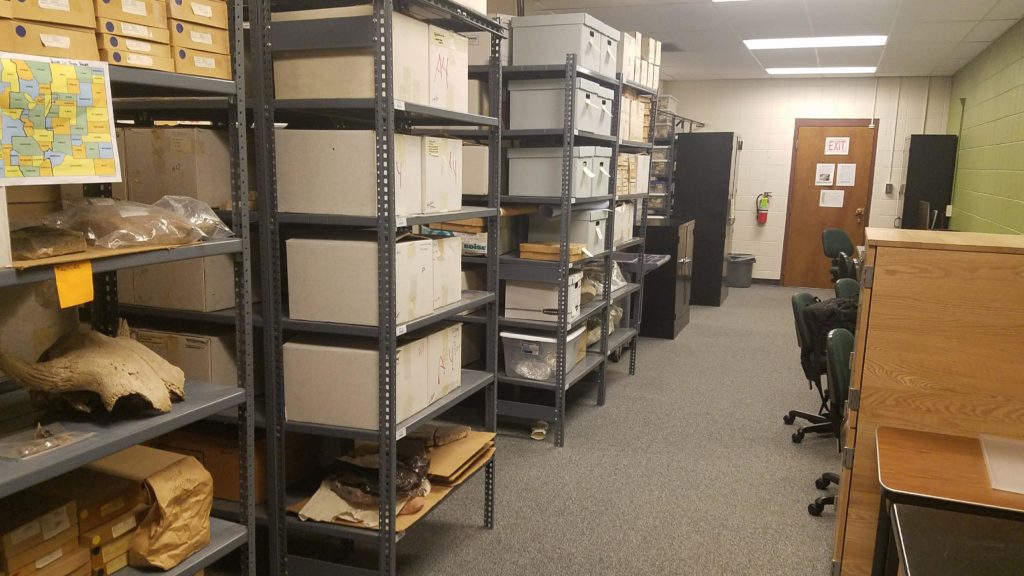
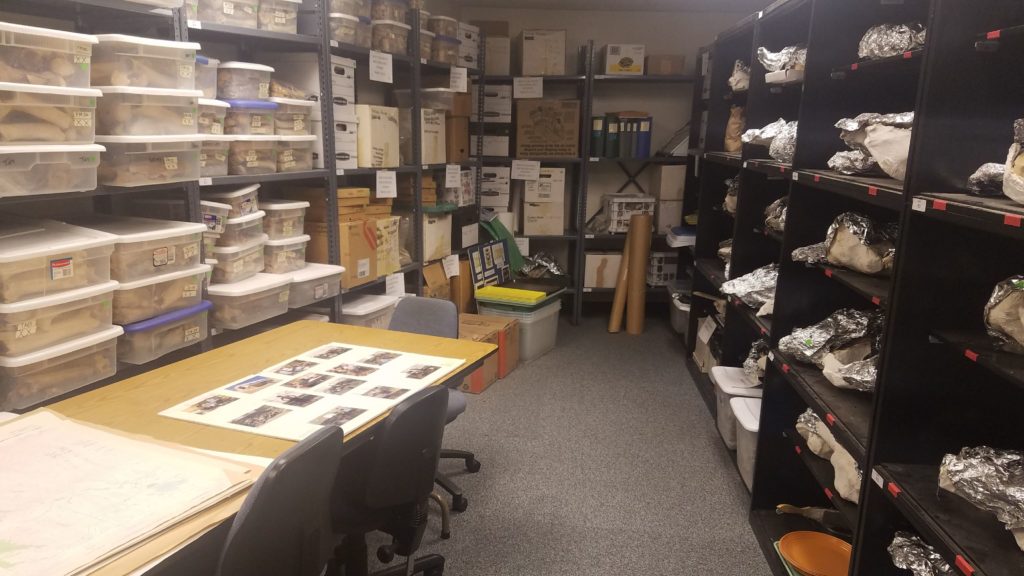
One of the fundamental challenges facing any museum is the task of assembling a collection in the first place. Shelves of neatly-organized bones, tools, biological specimens, and textiles do not organize themselves, and many small collections are often haphazardly cobbled together from disparate sets of objects lacking any clear sense of unity. Having spent a semester working in Colorado State University’s Archaeological Repository, I can confidently state that the basic task of organizing a collection is a very time consuming and challenging affair. Professor Calvin Jennings initially founded the Repository in the 1970sas a housing site for archaeological artifacts gathered by the Bureaus of Land Management and Reclamation throughout Northern Colorado. The collection itself moved locations several times over the past four decades and expanded to include thousands of materials gathered by CSU’s graduate students and field schools. Dr. Jason LaBelle has curated the ever-growing Repository in his spare time over the previous ten years, and CSU’s Anthropology Department hired Jeannine Pedersen-Guzman as its Archaeological Collections Coordinator in 2017. The Department has slowly tried to professionalize the Repository, not only for the sake of preserving its unique artifacts, but also with the intention of making its collections a valuable research and education resource for future archaeologists.

The CSU Archaeological Repository

Pedersen-Guzman, LaBelle, and their teams of student volunteers and interns face the daunting challenge of essentially organizing the collections from the ground up. The simple act of physically gathering the necessary materials into a centralized location is a laborious affair, since many sets of objects lie scattered around CSU, often cluttered in poorly-ventilated closets. The current Repository space, Clark A-22, located in the basement of CSU’s Andrew G. Clark building, has several structural problems of its own, but it provides an adequate storage area that will serve until the Department acquires a more state-of-the-art facility. I personally helped transfer hundreds of ancient bison bones from a small back room in Clark to the Repository, and quickly realized the potential dangers of moving large quantities of extremely fragile materials. While I never broke anything, the experience illuminated the critical importance of obtaining proper moving equipment. Many of the highly delicate bison skulls contained no insulation other than a flimsy aluminum foil wrapping and required great caution when moving.

The large closet which originally housed the findings from the Kaplan Hoover bison kill site.

After centralizing the physical collection, the truly time-consuming part of the organizational process begins. A uniform reference system is crucial for managing any collection, but the act of applying those standards requires considerable effort. The Repository’s contents accumulated slowly over a long time and include a diverse array of professional and student submissions. The task of deciphering the often-idiosyncratic classification methods of archaeologists into a uniform and systematized format provides the largest organizational hurdle for curators. Documentation for archaeological artifacts is often inconsistent regarding specific details (an especially common habit among contract archaeologists), frequently using personalized shorthand or omitting important classificatory data. Although the American Alliance of Museums includes collections management among its five core documents for consistent museum practices, Pedersen-Guzman suggests that they add a sixth entry for collections guidelines and standards. This would clarify specific catalogue terminologies and emphasize standard procedures of artifact handling and processing for archaeologists to follow before they deposited their findings in a collection. Guzman-Petersen and LaBelle have recently created and enforced just such a set of guidelines for CSU’s collections. Largely adapted from the standards employed by the University of Wyoming Archaeological Repository and sharing some overlap with Paul Bourcier’s Nomenclature 4.0 for Museum Cataloging, their document makes expectations regarding catalogue numbers, appropriate glossaries, classificatory tags and metadata, shipping materials, and field documentation clear from the outset.

A screenshot of the ICMS database.

While the Repository’s official standards ensure a degree of uniformity for future objects, the vast bulk of the collections’ contents still require attention. One of my primary projects this semester involved reorganizing a massive and motley set of bones, tools, debitage, and stones collected from the Killdeer site in Spring Gulch,Colorado. Gathered during the 1970s and 1980s, many of the artifacts contained minimal documentation and often lacked critical classificatory information.Catalog numbers, material composition, deterioration status, provenience and even basic physical measurements often went unrecorded or failed to meet the Repository’s guidelines. Although very time-consuming, this type of effective collections management is absolutely necessary to open up the full research potential of the Repository.

 The wide range of specialized terminologies for archaeological artifacts can be rather dizzying at times, but I recommend that any historian working in a museum become familiar with them. Not only is knowing appropriate classifications necessary for maintaining an orderly collection, but an understanding of anthropology can significantly deepen the quality of historical scholarship. In my discussions with Pedersen-Guzman, she emphasized her desire to integrate scholars from other disciplines into the Repository,especially historians. She argues that many of the reports and documents which accompany the collections’ artifacts fail to provide sufficient contextual interpretations for their findings and feels that historians possess the suitable analytical skills for such a task. Just as anthropology has much to offer historians in terms of sources and historical information, perhaps historians can make a similarly positive impact on anthropology’s interpretive potential.

Additional Resources:

https://www.aam-us.org/programs/ethics-standards-and-professional-practices/collections-management-policy/

https://www.aam-us.org/programs/ethics-standards-and-professional-practices/core-documents/

https://anthropology.colostate.edu/anthropology-labs/archaeological-repository/


Can History Have a Role in Park Interpretation?

Public historians, like many humanities scholars, can sometimes exhibit a tendency towards reclusiveness. Many of us like to shutter ourselves away with our books and spend our time reading and writing in solitude. We must not neglect the outward-oriented aspects of our craft, however. As much as we enjoy privately studying and exploring history, we chose this particular field because we recognize the importance of sharing our knowledge with the wider non-academic world. Understanding how to connect with an audience of non-specialists is a useful skill for any scholar to possess, but public historians face the challenge of conveying the relevancy of history in a way that promotes wide-scale comprehension and accessibility without necessarily sacrificing complexity. More importantly, how can we forge a connection with members of the public and work with them to develop a better understanding of our field?

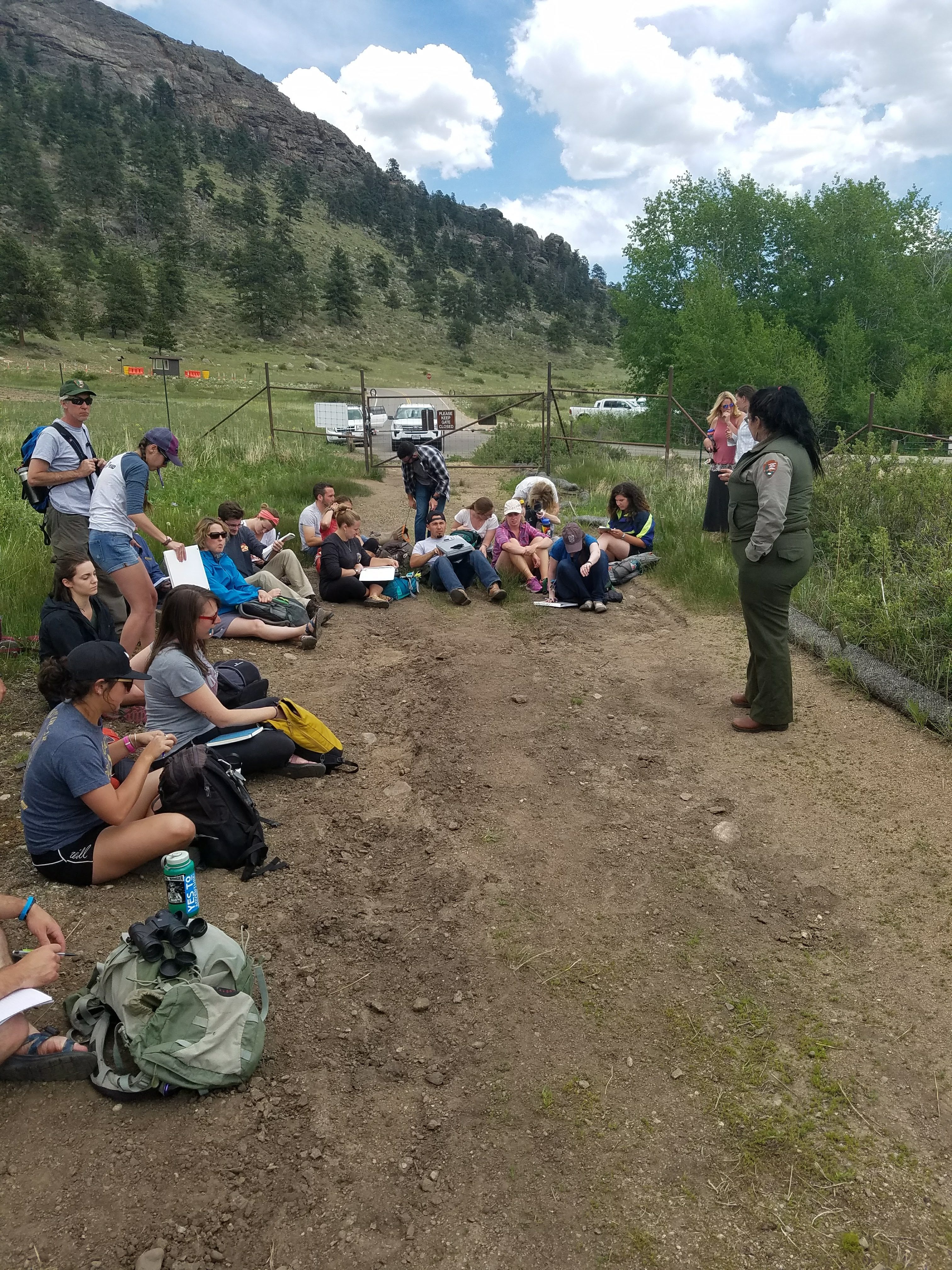
During the first full week of June, 2018, I gained some helpful experience in developing my own skills regarding audience interaction and tour-guiding by training with Rocky Mountain National Park’s seasonal team of interpretive rangers. Interpretation is the most publicly-oriented division of the National Park Service’s ranger corps and has served as a fundamental component of the park’s mission since its earliest days. The specific definition of interpretation used by the NPS has changed over time, but it generally entails leading park guests through activities that help them connect with and discover meaning in the park in ways that are both educational and deeply immersive. The famed naturalist (and Rocky Mountain National Park’s founding father) Enos Mills was an early master of reaching the public in this manner, often taking visitors on personally guided nature walks to improve their knowledge and appreciation for the natural world. Modern rangers tend to follow Mills’ example, leading park guests on carefully designed tours through the forest and mountain landscapes.

One of the park’s elk specialists giving tips on how to condense dense scientific subject matter into an accessible public presentation.

Most academic historical scholarship assumes a prior level of analytical skill and specialized knowledge among its readers. We cannot always expect the general public to immediately grasp or care much about the structural patterns and cultural developments that historians find so fascinating, but by engaging with audiences in a dialogue at more intimate level, perhaps we can explore new lines of questioning based off the personal meanings people find when they experience history in an interactive manner. Although Rocky Mountain National Park’s interpretive programming tends to focus primarily on ecology, zoology, and other sciences, the pedagogical methodologies employed by rangers apply equally well to instructing public audiences about history.  After all, many park interpreters describe their craft as a means to “enrich lives through engaging emotions, enhancing experiences and deepening understanding of people, places, events and objects from past and present” (emphasis mine).

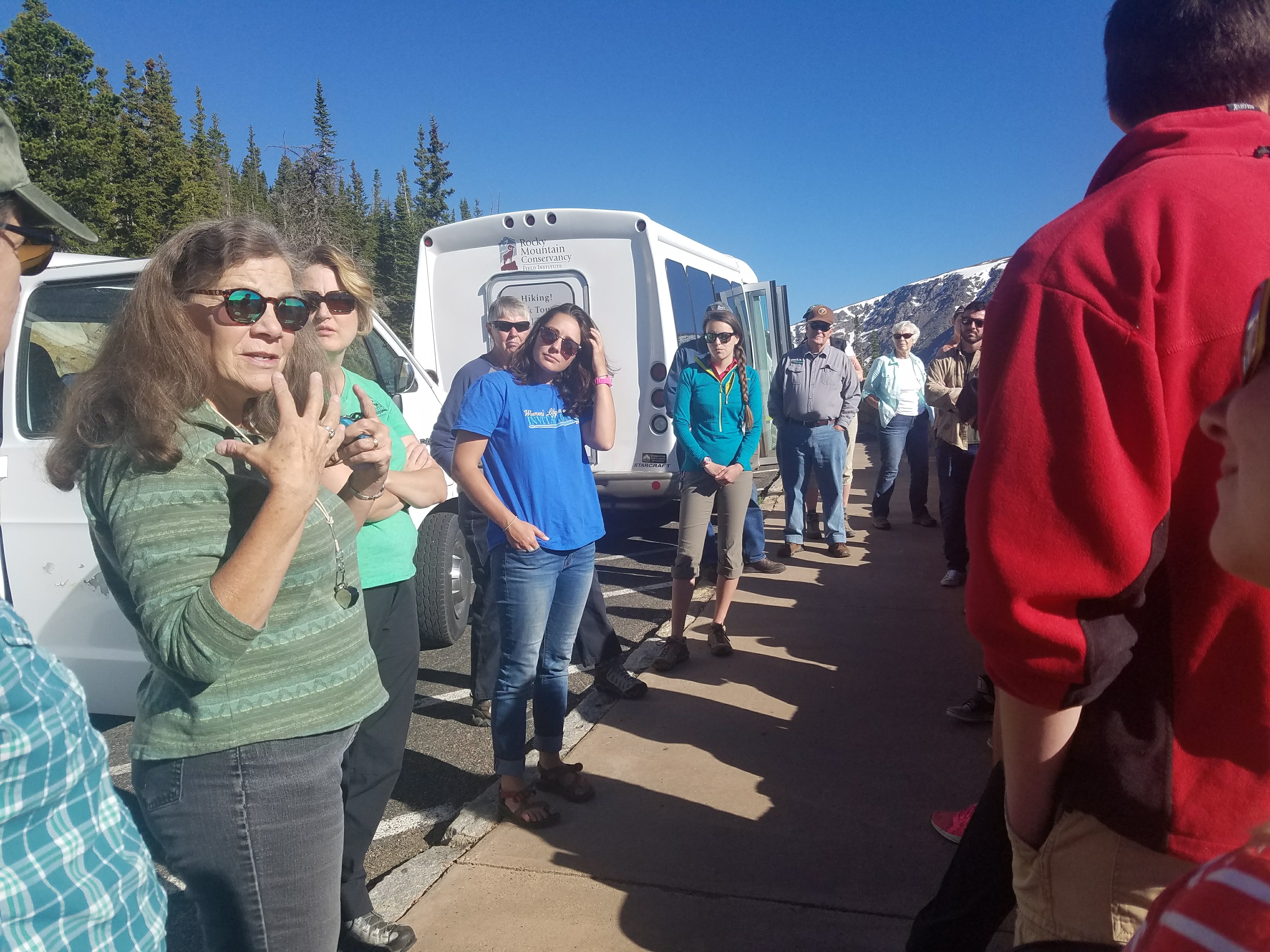
One veteran interpretive ranger, Jean Muenchrath, gave our group of interpretive trainees an illuminating lesson on how to integrate history into public programs during an instructional nature hike across Lily Mountain on the park’s eastern boundary. The immersive group activities she had strategically integrated into the walk mostly centered on exercises in ecological education, but towards the end of the hike she highlighted the various ways in which past inhabitants of the region may have experienced the local wilderness and used its resources. Having presented us with a deliberately-crafted historical picture of Lily Mountain, Jean then asked us to critically examine the sights and sounds of the surrounding landscape in order to discern any potential changes or continuities over time. The trainees (most of whom lacked any serious historical training) made several diverse observations, ranging from ecosystem alterations and growing concentrations of people to more subtle perceptions like the dim but ever-present roar of modern car traffic down the nearby highway. A wide range of novel historical questions stemmed from this activity, and participants seemed to gain a deeper reverence for Lily Mountain by letting their own direct experiences and personal knowledge inform their investigations of its past.

Jean Muenchrath (second from left) teaching interpretive rangers how to engage with the public.

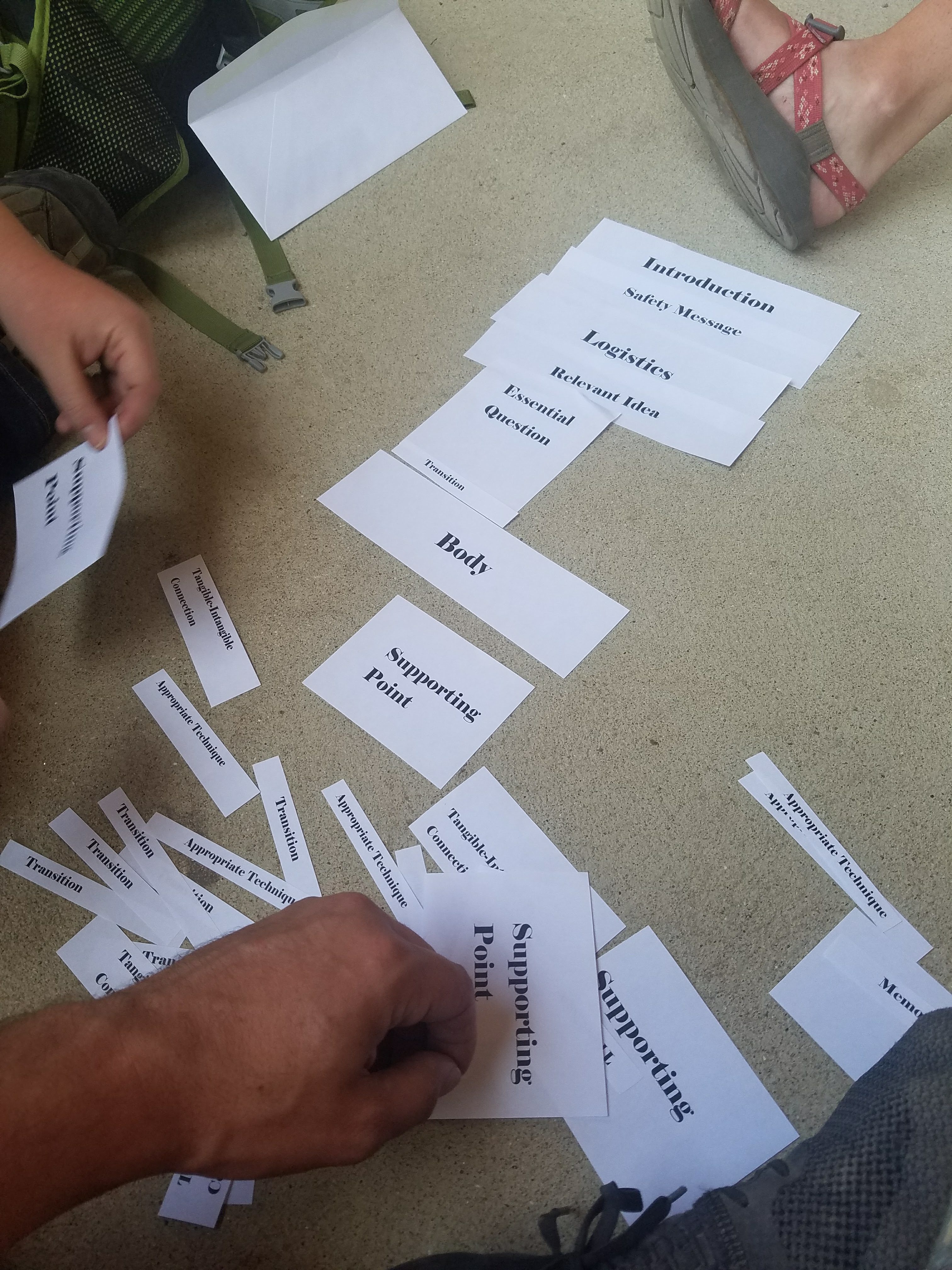
Part of what made Jean’s nature walk so effective was how natural and seamless it appeared. Far from a simple hike with an accompanying ranger commentary, each interactive lesson that Jean included in her program flowed together with a subtle story-like quality. After we descended the mountain, she explicitly deconstructed the specific narrative components of her walk and then had the trainees engage in a rudimentary outlining exercise. Building an interpretive tour program greatly resembles the process of writing a persuasive paper in many ways. By centering a program on a primary question or argument and then using interpretive activities and educational lessons to reinforce that main point, one can keep an audience mentally focused. The ideal program exhibits a sense of cohesiveness and clear intentions which prompt participants to formulate germane questions. For instance, Jean’s walk revolved around the somewhat intangible question of what relationships look like at different levels of life. Lessons scattered throughout her program subsequently fleshed out this central inquiry by exposing her audience to the myriad connections between plants, animals, ecosystems, and human beings within the local environment.

An exercise on how to construct a compelling narrative to build a program around.

While Jean mainly relied upon comparative imagery techniques and experiential exercises to illustrate her points, the trainees also learned more assertive engagement tactics throughout the week. Facilitated discussion, for example, is a strategy explicitly designed to force guests to choose a side on a divisive issue and then explain their reasoning. The interpreter usually allows the guests to dictate the course of the subsequent discourse, resulting in an openly low-pressure debating environment for everyone involved. Having seen these different pedagogical methodologies in action, I believe they could easily make historical topics more palatable and immersive for lay audiences as well. As someone concerned with making history relevant for the public yet slightly perplexed in how to get non-specialists to feel more involved, this week was immensely helpful for me. If a mild imaginative exercise like Jean’s could elicit such thoughtful observations, I can only imagine what kind of audience reaction a more deliberately historical analysis could provoke.


Related Links:

Foundations of NPS Interpretation Programs

Rocky Mountain National Park Teacher Guides (includes cultural histories)


Welcome!

Hi, I’m Joseph Sarr! This is my public history website. If you click on the link “Public History Experience,” you can look at the various student and professional projects I have worked on for school. Enjoy!

css.php