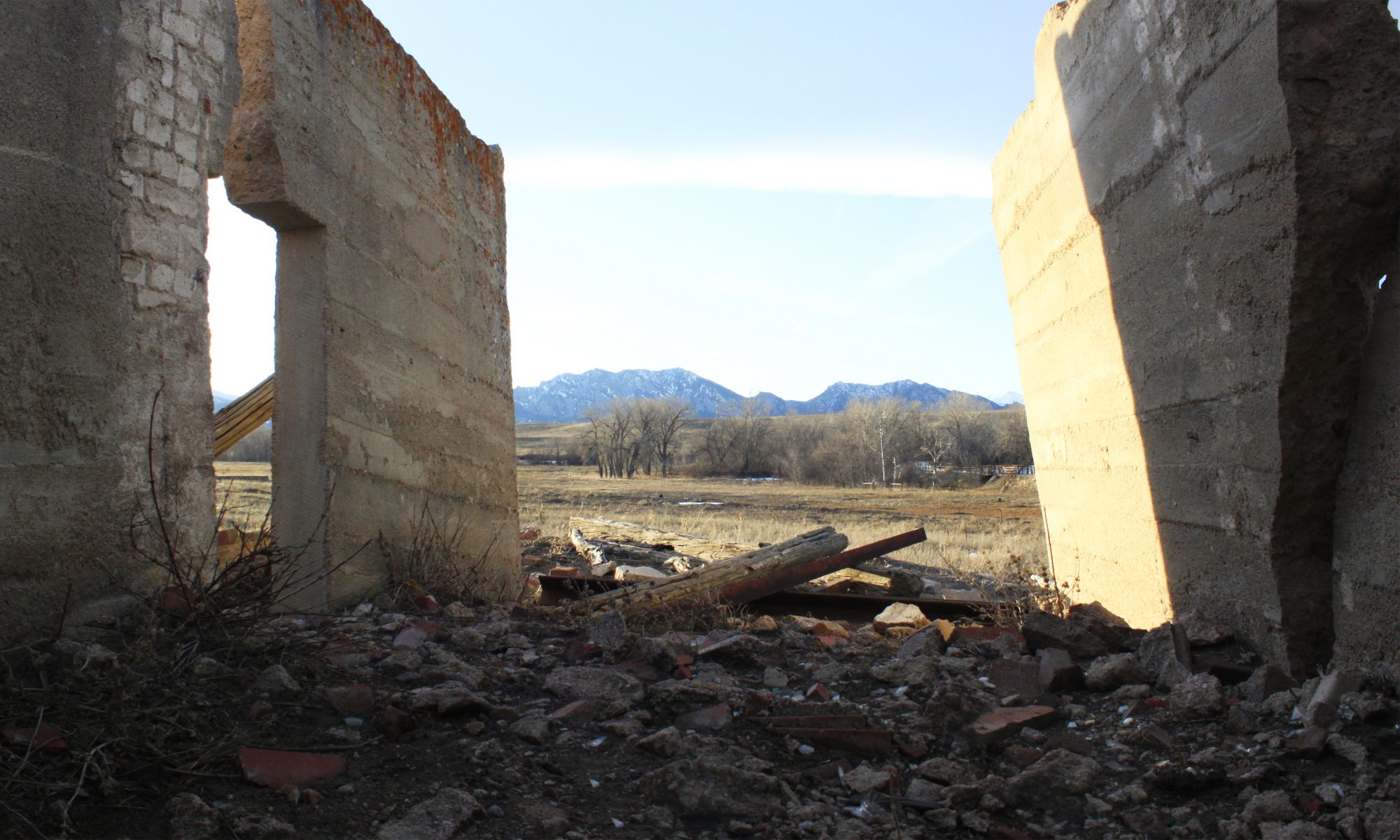
When many people think of museums, the public face of the institution often comes to mind. Exhibits,object displays, panels, and the production elements that make museums so immersive usually compose the standard visitor experience. Equally important to the public, however, are the collections which make that experience possible.Though often less theatrical and glamorous than the gallery space, high-quality collections are vital and foundational components of practically any historical or scientific museum. Far from simply serving as “storage spaces,” for future exhibits, typical museum collections rely on the tireless efforts of curators and preservationists to conserve the physical integrity of objects and organize thousands of diverse artifacts in such a way as to make them accessible for researchers.
One of the fundamental challenges facing any museum is the task of assembling a collection in the first place. Shelves of neatly-organized bones, tools, biological specimens, and textiles do not organize themselves, and many small collections are often haphazardly cobbled together from disparate sets of objects lacking any clear sense of unity. Having spent a semester working in Colorado State University’s Archaeological Repository, I can confidently state that the basic task of organizing a collection is a very time consuming and challenging affair. Professor Calvin Jennings initially founded the Repository in the 1970sas a housing site for archaeological artifacts gathered by the Bureaus of Land Management and Reclamation throughout Northern Colorado. The collection itself moved locations several times over the past four decades and expanded to include thousands of materials gathered by CSU’s graduate students and field schools. Dr. Jason LaBelle has curated the ever-growing Repository in his spare time over the previous ten years, and CSU’s Anthropology Department hired Jeannine Pedersen-Guzman as its Archaeological Collections Coordinator in 2017. The Department has slowly tried to professionalize the Repository, not only for the sake of preserving its unique artifacts, but also with the intention of making its collections a valuable research and education resource for future archaeologists.
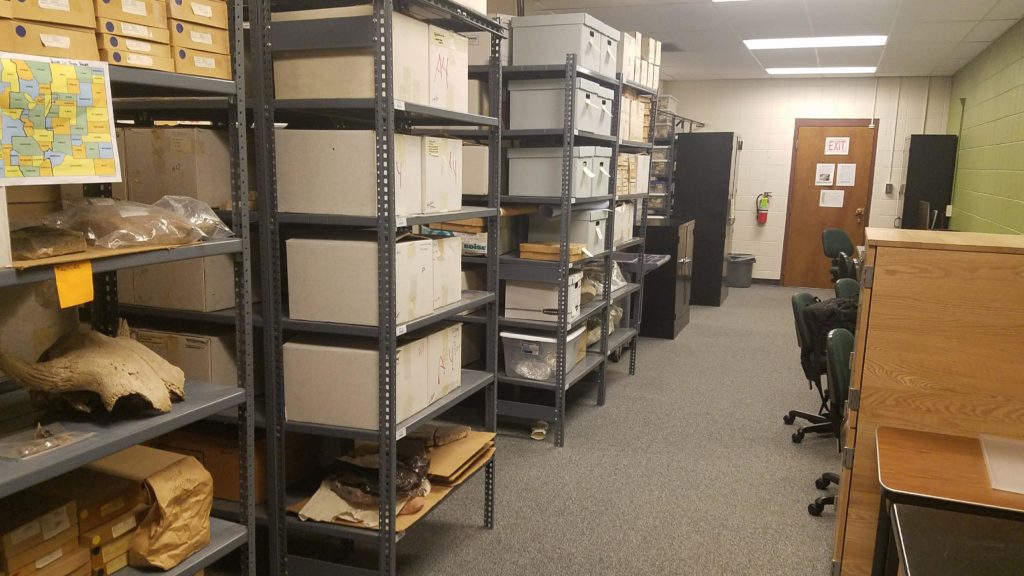
Pedersen-Guzman, LaBelle, and their teams of student volunteers and interns face the daunting challenge of essentially organizing the collections from the ground up. The simple act of physically gathering the necessary materials into a centralized location is a laborious affair, since many sets of objects lie scattered around CSU, often cluttered in poorly-ventilated closets. The current Repository space, Clark A-22, located in the basement of CSU’s Andrew G. Clark building, has several structural problems of its own, but it provides an adequate storage area that will serve until the Department acquires a more state-of-the-art facility. I personally helped transfer hundreds of ancient bison bones from a small back room in Clark to the Repository, and quickly realized the potential dangers of moving large quantities of extremely fragile materials. While I never broke anything, the experience illuminated the critical importance of obtaining proper moving equipment. Many of the highly delicate bison skulls contained no insulation other than a flimsy aluminum foil wrapping and required great caution when moving.
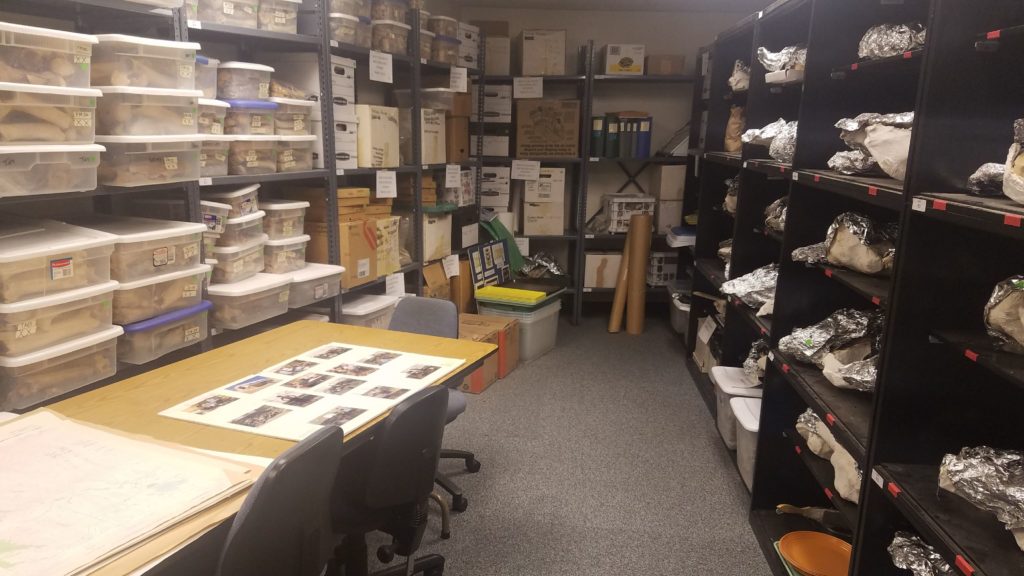
After centralizing the physical collection, the truly time-consuming part of the organizational process begins. A uniform reference system is crucial for managing any collection, but the act of applying those standards requires considerable effort. The Repository’s contents accumulated slowly over a long time and include a diverse array of professional and student submissions. The task of deciphering the often-idiosyncratic classification methods of archaeologists into a uniform and systematized format provides the largest organizational hurdle for curators. Documentation for archaeological artifacts is often inconsistent regarding specific details (an especially common habit among contract archaeologists), frequently using personalized shorthand or omitting important classificatory data. Although the American Alliance of Museums includes collections management among its five core documents for consistent museum practices, Pedersen-Guzman suggests that they add a sixth entry for collections guidelines and standards. This would clarify specific catalogue terminologies and emphasize standard procedures of artifact handling and processing for archaeologists to follow before they deposited their findings in a collection. Guzman-Petersen and LaBelle have recently created and enforced just such a set of guidelines for CSU’s collections. Largely adapted from the standards employed by the University of Wyoming Archaeological Repository and sharing some overlap with Paul Bourcier’s Nomenclature 4.0 for Museum Cataloging, their document makes expectations regarding catalogue numbers, appropriate glossaries, classificatory tags and metadata, shipping materials, and field documentation clear from the outset.
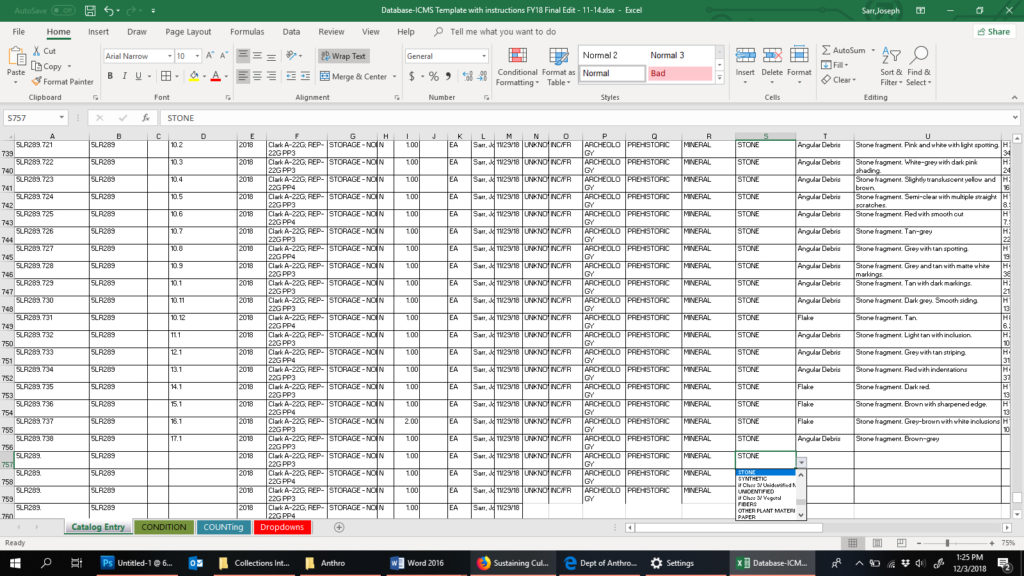
While the Repository’s official standards ensure a degree of uniformity for future objects, the vast bulk of the collections’ contents still require attention. One of my primary projects this semester involved reorganizing a massive and motley set of bones, tools, debitage, and stones collected from the Killdeer site in Spring Gulch,Colorado. Gathered during the 1970s and 1980s, many of the artifacts contained minimal documentation and often lacked critical classificatory information.Catalog numbers, material composition, deterioration status, provenience and even basic physical measurements often went unrecorded or failed to meet the Repository’s guidelines. Although very time-consuming, this type of effective collections management is absolutely necessary to open up the full research potential of the Repository.
The wide range of specialized terminologies for archaeological artifacts can be rather dizzying at times, but I recommend that any historian working in a museum become familiar with them. Not only is knowing appropriate classifications necessary for maintaining an orderly collection, but an understanding of anthropology can significantly deepen the quality of historical scholarship. In my discussions with Pedersen-Guzman, she emphasized her desire to integrate scholars from other disciplines into the Repository,especially historians. She argues that many of the reports and documents which accompany the collections’ artifacts fail to provide sufficient contextual interpretations for their findings and feels that historians possess the suitable analytical skills for such a task. Just as anthropology has much to offer historians in terms of sources and historical information, perhaps historians can make a similarly positive impact on anthropology’s interpretive potential.
Additional Resources:
https://www.aam-us.org/programs/ethics-standards-and-professional-practices/core-documents/
