Public historians, like many humanities scholars, can sometimes exhibit a tendency towards reclusiveness. Many of us like to shutter ourselves away with our books and spend our time reading and writing in solitude. We must not neglect the outward-oriented aspects of our craft, however. As much as we enjoy privately studying and exploring history, we chose this particular field because we recognize the importance of sharing our knowledge with the wider non-academic world. Understanding how to connect with an audience of non-specialists is a useful skill for any scholar to possess, but public historians face the challenge of conveying the relevancy of history in a way that promotes wide-scale comprehension and accessibility without necessarily sacrificing complexity. More importantly, how can we forge a connection with members of the public and work with them to develop a better understanding of our field?
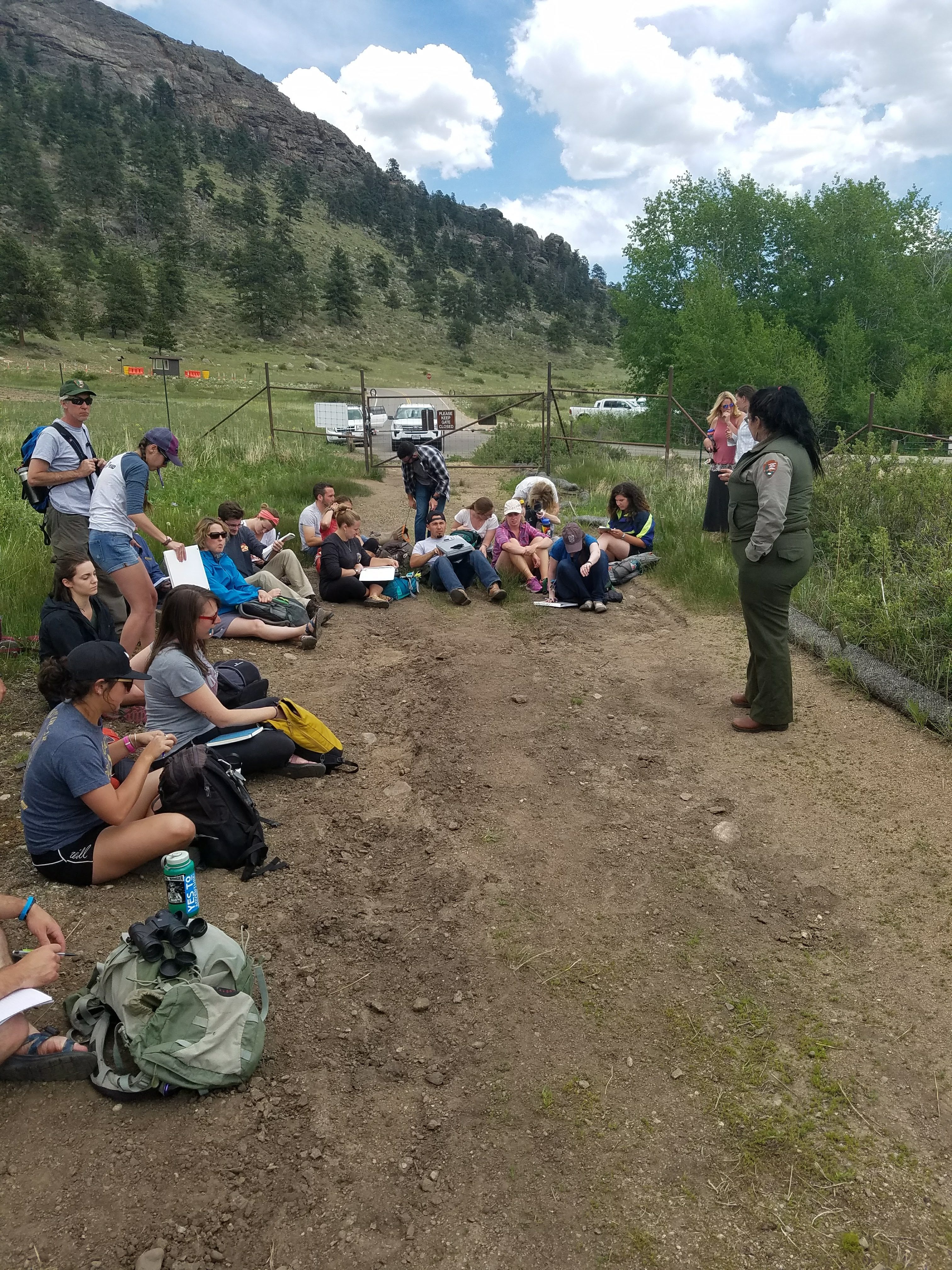
During the first full week of June, 2018, I gained some helpful experience in developing my own skills regarding audience interaction and tour-guiding by training with Rocky Mountain National Park’s seasonal team of interpretive rangers. Interpretation is the most publicly-oriented division of the National Park Service’s ranger corps and has served as a fundamental component of the park’s mission since its earliest days. The specific definition of interpretation used by the NPS has changed over time, but it generally entails leading park guests through activities that help them connect with and discover meaning in the park in ways that are both educational and deeply immersive. The famed naturalist (and Rocky Mountain National Park’s founding father) Enos Mills was an early master of reaching the public in this manner, often taking visitors on personally guided nature walks to improve their knowledge and appreciation for the natural world. Modern rangers tend to follow Mills’ example, leading park guests on carefully designed tours through the forest and mountain landscapes.
Most academic historical scholarship assumes a prior level of analytical skill and specialized knowledge among its readers. We cannot always expect the general public to immediately grasp or care much about the structural patterns and cultural developments that historians find so fascinating, but by engaging with audiences in a dialogue at more intimate level, perhaps we can explore new lines of questioning based off the personal meanings people find when they experience history in an interactive manner. Although Rocky Mountain National Park’s interpretive programming tends to focus primarily on ecology, zoology, and other sciences, the pedagogical methodologies employed by rangers apply equally well to instructing public audiences about history. After all, many park interpreters describe their craft as a means to “enrich lives through engaging emotions, enhancing experiences and deepening understanding of people, places, events and objects from past and present” (emphasis mine).
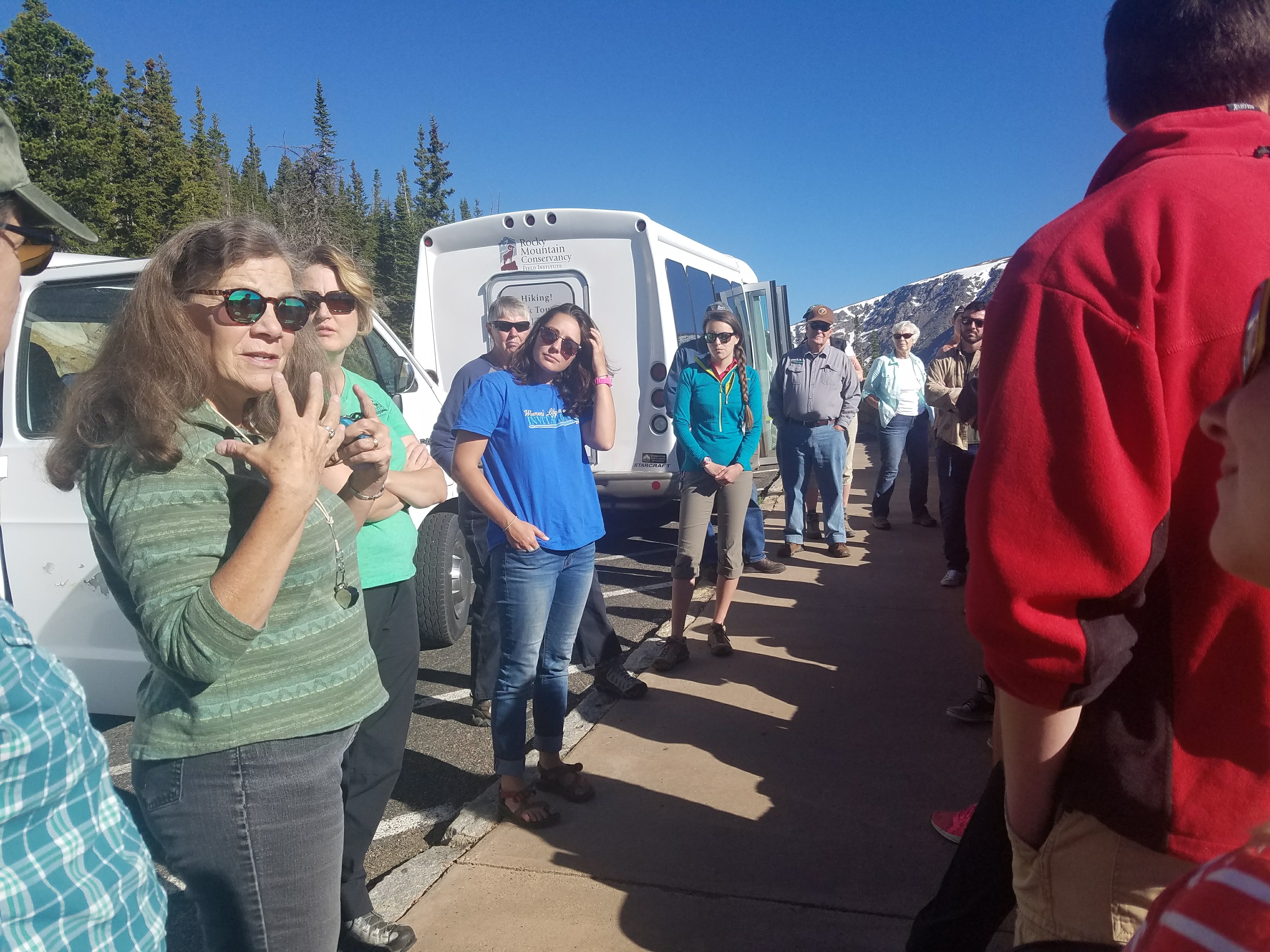
One veteran interpretive ranger, Jean Muenchrath, gave our group of interpretive trainees an illuminating lesson on how to integrate history into public programs during an instructional nature hike across Lily Mountain on the park’s eastern boundary. The immersive group activities she had strategically integrated into the walk mostly centered on exercises in ecological education, but towards the end of the hike she highlighted the various ways in which past inhabitants of the region may have experienced the local wilderness and used its resources. Having presented us with a deliberately-crafted historical picture of Lily Mountain, Jean then asked us to critically examine the sights and sounds of the surrounding landscape in order to discern any potential changes or continuities over time. The trainees (most of whom lacked any serious historical training) made several diverse observations, ranging from ecosystem alterations and growing concentrations of people to more subtle perceptions like the dim but ever-present roar of modern car traffic down the nearby highway. A wide range of novel historical questions stemmed from this activity, and participants seemed to gain a deeper reverence for Lily Mountain by letting their own direct experiences and personal knowledge inform their investigations of its past.
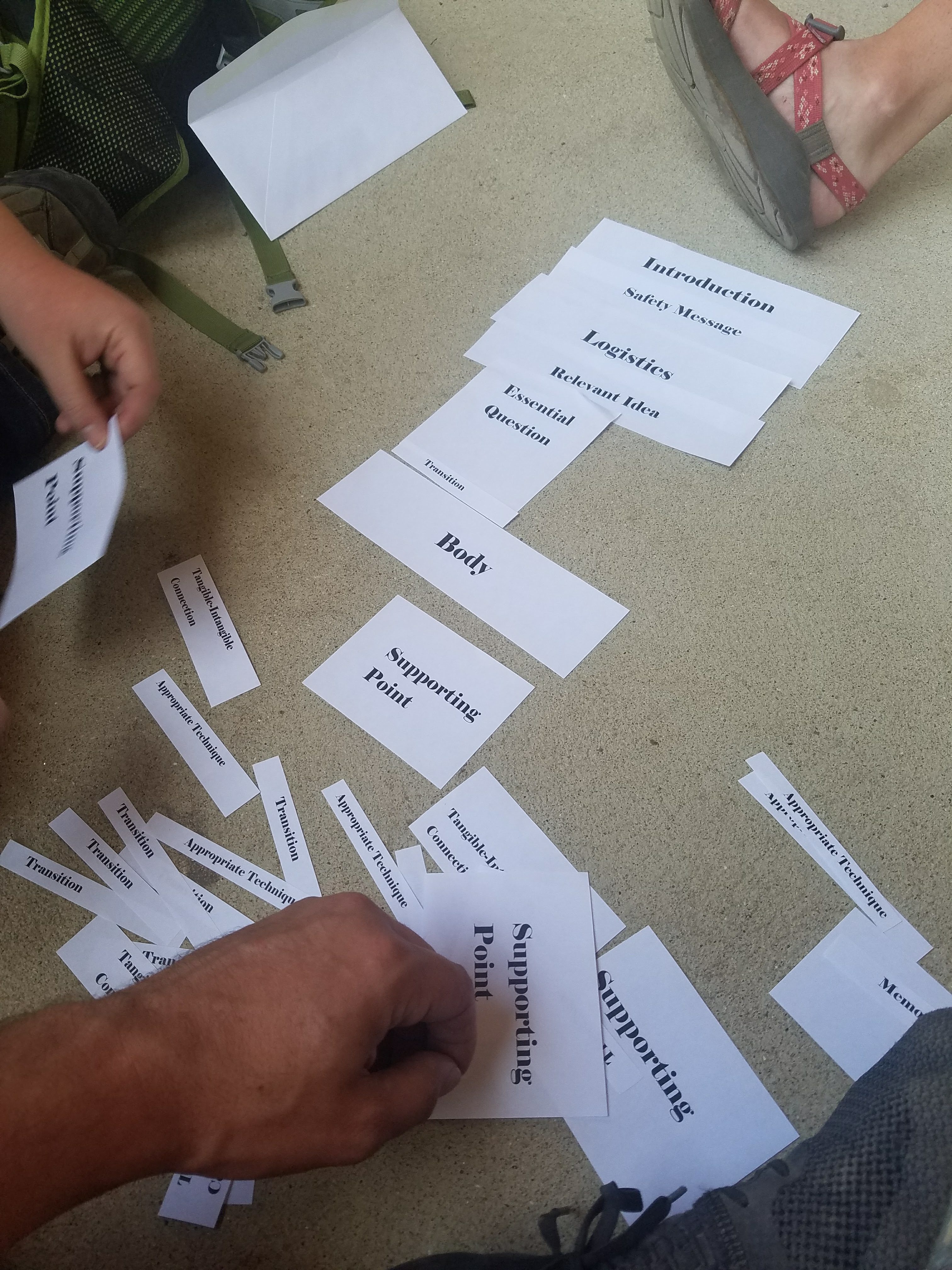
Part of what made Jean’s nature walk so effective was how natural and seamless it appeared. Far from a simple hike with an accompanying ranger commentary, each interactive lesson that Jean included in her program flowed together with a subtle story-like quality. After we descended the mountain, she explicitly deconstructed the specific narrative components of her walk and then had the trainees engage in a rudimentary outlining exercise. Building an interpretive tour program greatly resembles the process of writing a persuasive paper in many ways. By centering a program on a primary question or argument and then using interpretive activities and educational lessons to reinforce that main point, one can keep an audience mentally focused. The ideal program exhibits a sense of cohesiveness and clear intentions which prompt participants to formulate germane questions. For instance, Jean’s walk revolved around the somewhat intangible question of what relationships look like at different levels of life. Lessons scattered throughout her program subsequently fleshed out this central inquiry by exposing her audience to the myriad connections between plants, animals, ecosystems, and human beings within the local environment.
While Jean mainly relied upon comparative imagery techniques and experiential exercises to illustrate her points, the trainees also learned more assertive engagement tactics throughout the week. Facilitated discussion, for example, is a strategy explicitly designed to force guests to choose a side on a divisive issue and then explain their reasoning. The interpreter usually allows the guests to dictate the course of the subsequent discourse, resulting in an openly low-pressure debating environment for everyone involved. Having seen these different pedagogical methodologies in action, I believe they could easily make historical topics more palatable and immersive for lay audiences as well. As someone concerned with making history relevant for the public yet slightly perplexed in how to get non-specialists to feel more involved, this week was immensely helpful for me. If a mild imaginative exercise like Jean’s could elicit such thoughtful observations, I can only imagine what kind of audience reaction a more deliberately historical analysis could provoke.
Related Links:
Foundations of NPS Interpretation Programs
Rocky Mountain National Park Teacher Guides (includes cultural histories)
